Open House – ABA and Day Program Services
Information on half-day and after school ABA programs. Funding options and waivers (NOW/COMP). IEP strategies for ages 16-21. Meet and greet with experts from multiple organizations.
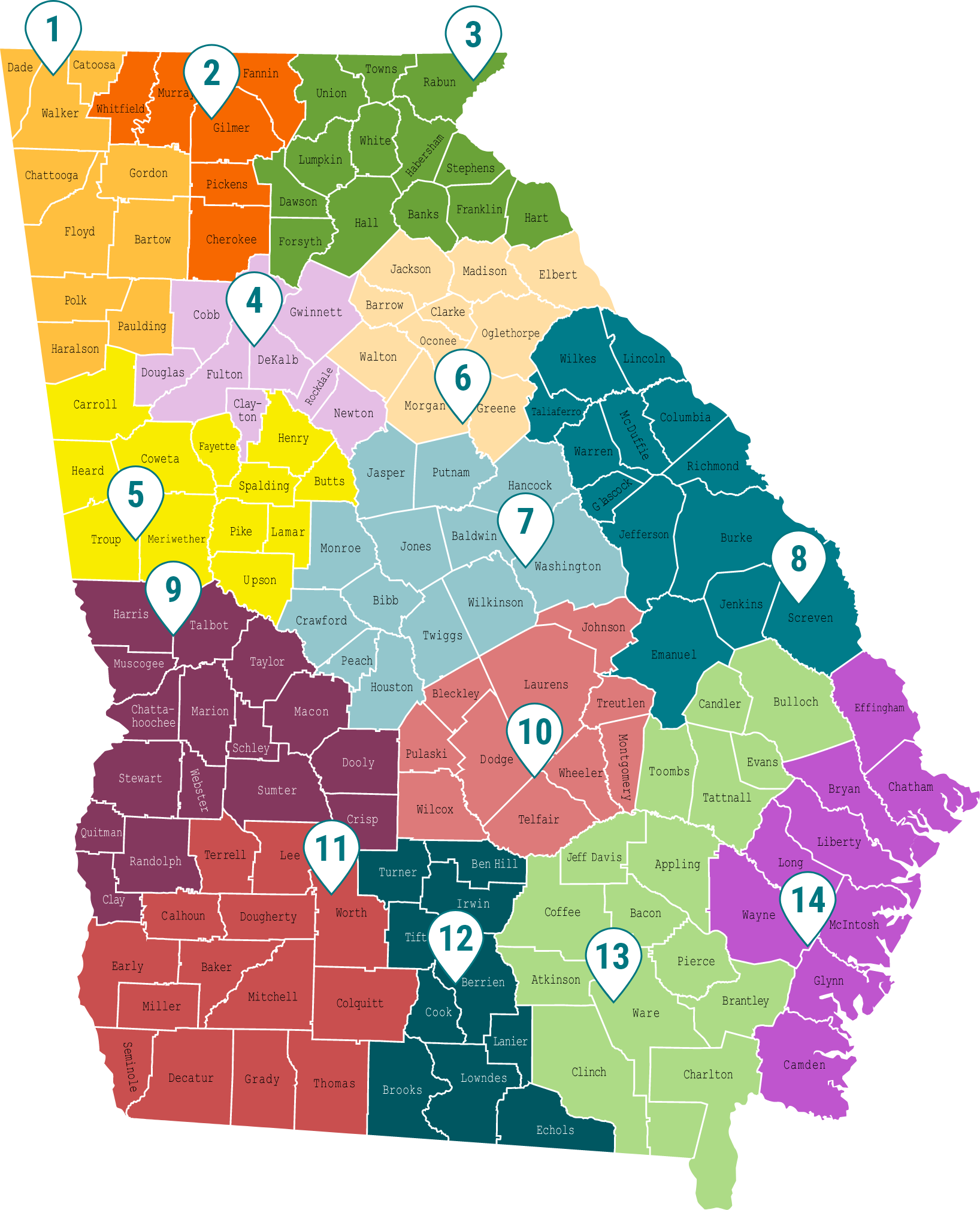
To find in-person events in your area, first use the map below to find out which region you are in. Click on the drop-down menu for your region and click on “Find Events.” The calendar will show which events are near you!
Is there an autism-related event happening in your area? Please add it to our calendar to get the word out! You can also send us events that you would like to add to the calendar using our “Contact Us” page.
Information on half-day and after school ABA programs. Funding options and waivers (NOW/COMP). IEP strategies for ages 16-21. Meet and greet with experts from multiple organizations.
Get ready for a fun Virtual Playgroup experience!
During each session our early childhood experts will plan activities that encourage adult-child interactions throughout the session and beyond. All activities and experiences are based on topics that will prepare children for success in school and life.
Children and their caregivers will engage with other participants while singing songs, reading stories, and participating in interactive activities. Walk away with tools and resources to help create quality early childhood experiences in your home!
This webinar is part of a series for special educators presented by the Center on Youth Voice, Youth Choice, a project at the Institute for Community Inclusion. Visit www.youth-voice.org for more information.
Join us for a helpful webinar about empowering college students with intellectual disability. It’s important for educators, family members, and advocates to support students in making their own choices and becoming more independent. Allowing students to take reasonable risks—like trying new things or facing challenges—can help them grow and fully enjoy their college experience. We will also discuss how to ensure that students with disabilities are included in all aspects of campus life. This part of the session will provide practical tips for educators and families on how to help students get more involved in campus activities. During this session, we will cover practical strategies to:
• Promote Self-Determination: Learn how to support students in solving problems and making decisions in their daily lives on campus.
• Encourage Independence: Discover ways to help students develop skills for living on their own, participating in classes, and joining social activities.
• Support Active Campus Involvement: Find out how to motivate students to join clubs, organizations, and events.
Real-Life Examples:
• Hear stories from students who took reasonable risks and became more independent as active members of their campus.
• Learn about strategies used by staff to encourage students’ independence, such as attending classes on their own, using public transportation, and managing their time between classes.
For more information, contact Sheila at sheila.johnson@umb.edu or visit ThinkCollege.Net
On behalf of the U.S. Department of Education, Office of Elementary and Secondary Education’s Office of Safe and Supportive Schools and Center for Faith-Based and Neighborhood Partnerships, the National Center on Safe Supportive Learning Environments (NCSSLE) invites you to join our next webinar, Student Religious Expression in Public Schools.
The First Amendment protects the rights of all students to participate in religious expression or choose not to do so. Understanding and being responsive to the religious accommodations requests of students is not only constitutionally required but also creates inclusive learning environments necessary for student success.
In this webinar, you will learn about the experiences of students and educators who work to support students of all religious, secular, and spiritual backgrounds in showing up in school as their full selves, and the positive impact doing so has had on their learning environments. The panel will also answer frequently asked questions about what religious freedom protections the U.S. Constitution guarantees to all students. We will conclude the webinar by addressing questions posed by the audience.
Unlock the Power of IDEA at our Virtual Training!
Discover how IDEA safeguards the rights of students with disabilities, ensuring they receive the personalized support they need through an Individualized Education Plan (IEP). This session will empower you with knowledge to advocate effectively for your child's unique educational needs.
What You Will Learn:
• The six essential principles of IDEA and how it protects your child's rights
Reserve your spot today and become a more confident advocate for your child's education!
Our Education and Support Specialists are seasoned facilitators, each bringing years of experience supporting parents at IEP meetings and helping them understand IDEA. They too are parents like you who are passionate about the success of students with disabilities.
To later participate in the IEP seminar, please register by following this link: bit.ly/4fvmhkn
Discover the importance of an IEP and how to ensure your child receives the personalized support they need through an Individualized Education Plan (IEP). This session will empower you with knowledge to advocate effectively for your child's unique educational needs.
What You Will Learn:
• How IEPs are created to provide customized special education services.
Reserve your spot today and become a more confident advocate for your child's education!
Our Education and Support Specialists are seasoned facilitators, each bringing years of experience supporting parents at IEP meetings and helping them understand IDEA. They too are parents like you who are passionate about the success of students with disabilities.
Many students with disabilities play little to no role in their own Individualized Education Program (IEP) meetings and the planning of their services, accommodations, and goals. However, research shows that when students lead their own IEP meetings, they become more engaged in their education, learn important self-advocacy skills, and take greater ownership over their learning. Student-led IEPs promote self-determination and give students a greater sense of control over their education. Educators, administrators, students, and family members are encouraged to attend.
Presenter: Julie Mlagan is currently serving as an Implementation Specialist for the Transition Improvement Grant (TIG) in the CESA 1 & CESA2 Regions. She has over two decades of experience working for individuals with intellectual, developmental, and related disabilities in the community and classroom. She earned a BS in Voc Rehab, MS in Ed Psych & a MS in Spec Ed. Her experience includes job development, coaching, guardianship, case management, & teaching functional academics & community-based transition skills. As a special education and transition professional, she is avid about preparing students for self-advocacy, employment, education & independence as they prepare for life after high school.
In this webcast, we will examine how to assist students with significant support needs in connecting or maintaining connections to employment-related services when exiting high school. This meeting uses a person-centered approach that helps the student connect to services that fit their employment goals. The presenters will review how to use an “Exit Meeting Tool” to provide structure for a team supporting the student. This tool reviews students’ interests, needs, and goals related to employment and services that can support the student after high school. We will also review tips and resources for parents as their students exit high school.
Ever wonder what a Prior Written Notice (PWN) really means for your child’s IEP? Join Stephanie Petrillo to learn what a PWN is, when it’s needed, and why it’s such an important document for families. Gain the knowledge and confidence to make sure your child’s needs are clearly understood.
Learn about functional behavioral assessment (FBA), behavior intervention plans (BIP) and how to be proactive in addressing behavior in your child’s IEP.
Click on your region below to find events in your area.