• IEP meetings for your child with mental health needs

    Individualized Education Program (IEP) team meetings can be challenging when a child has complex mental health needs. This workshop will help parents prepare for a positive meeting to support their child’s mental health needs in school. It will include a discussion of an example IEP and explore what each section means, what parents need to know, questions to ask, and how to advocate for changes. Participants will also develop a greater understanding of what positive supports and interventions are available and how to navigate disagreements.

    Free
  • Moving Up! Transitioning to a new school on an IEP

    Join us for this workshop to learn about the transition process from elementary to middle school and middle to high school for students with Individualized Education Programs (IEPs). Parents will learn about the importance of having a transition meeting, the timeline of transitioning to a new school, what resources and supports are available, and ways they can prepare and support their child.

    Free
  • World Autism Day: Intersectionality in Neurodivergent Lives Symposium

    Join us on World Autism Day, Thursday, April 2, for a powerful gathering of voices from across the Neurodivergent community. We will explore how our intersecting identities of race, gender, ethnicity, sexuality, disability, culture, and neurotype shape our Neurodivergent experiences of belonging and connection. Together, we’ll celebrate the strength of our shared experiences and imagine a future where every Neurodivergent person is seen, valued, and included.

    $45 – $60
  • Introduction to Autism for Adults

    A presentation and discussion for Autistic adults to come and explore their understanding of autism through a neurological lens. We will discuss common misconceptions, the Autistic identity, and common Autistic traits, strengths, and challenges. This presentation is given by an Autistic adult and a Neurodivergent ally. You might enjoy this presentation and discussion if you are newly diagnosed, considering whether you may be autistic, or if you have only explored autism through a deficit lens in the past.

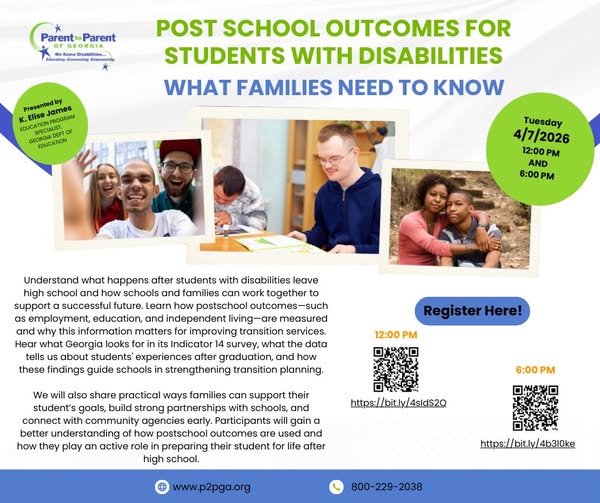
  • Post School Outcomes

    What happens after students with disabilities leave high school? Join us for a webinar designed to help families understand the transition to adulthood and how schools and families can work together to support a successful future.
    During this session, we’ll explore post-school outcomes like employment, continuing education, and independent living, and why this information is important for improving transition services. We’ll also break down Georgia’s Indicator 14 survey, what it tells us about students’ experiences after graduation, and how schools use this data to strengthen transition planning.
    Families will leave with practical ideas for supporting their student’s goals, building strong partnerships with schools, and connecting with community resources early so students are better prepared for life after high school.

    Free
  • Post School Outcomes

    What happens after students with disabilities leave high school? Join us for a webinar designed to help families understand the transition to adulthood and how schools and families can work together to support a successful future.
    During this session, we’ll explore post-school outcomes like employment, continuing education, and independent living, and why this information is important for improving transition services. We’ll also break down Georgia’s Indicator 14 survey, what it tells us about students’ experiences after graduation, and how schools use this data to strengthen transition planning.
    Families will leave with practical ideas for supporting their student’s goals, building strong partnerships with schools, and connecting with community resources early so students are better prepared for life after high school.
    Register here for the 12:00pm session: https://bit.ly/4sIdS2Q
    Register here for the 6:00pm session: https://bit.ly/4b3l0ke

    Free
  • Family Voices Leadership Conference

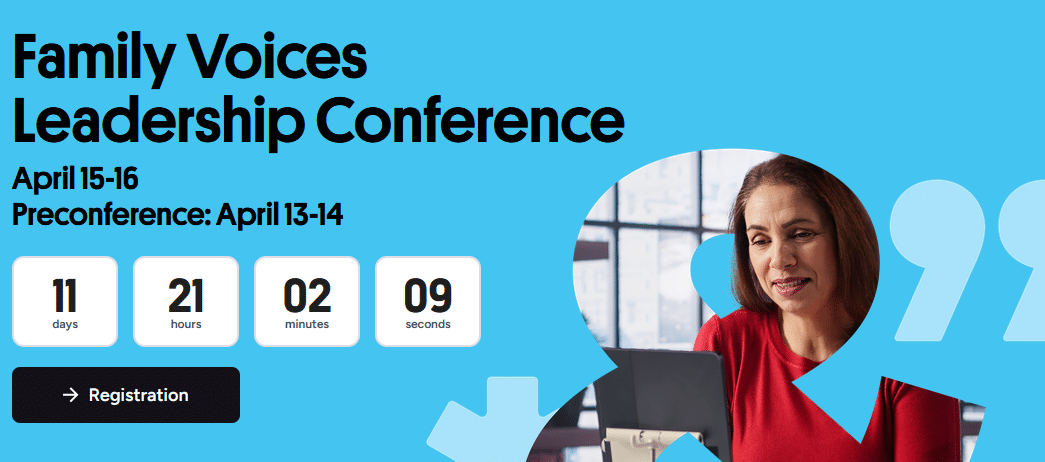
    FVLC2026 is the nation’s premier conference for family leaders and family engagement professionals to learn, network, and build their skills to support family engagement in systems of care. The conference will be offered as a 3D virtual experience, to support the attendance of families and partners from allover the country. Attendees include family leaders, youth with disabilities, public health professionals, health care providers, and patient experience professionals.

    FVLC2026 will be offered in English and Spanish. Accessibility accommodations are available upon request, and conference materials may be made available in other languages besides English and Spanish.

    $350
  • 19th Annual Conference on Autism: Research-Based Solutions

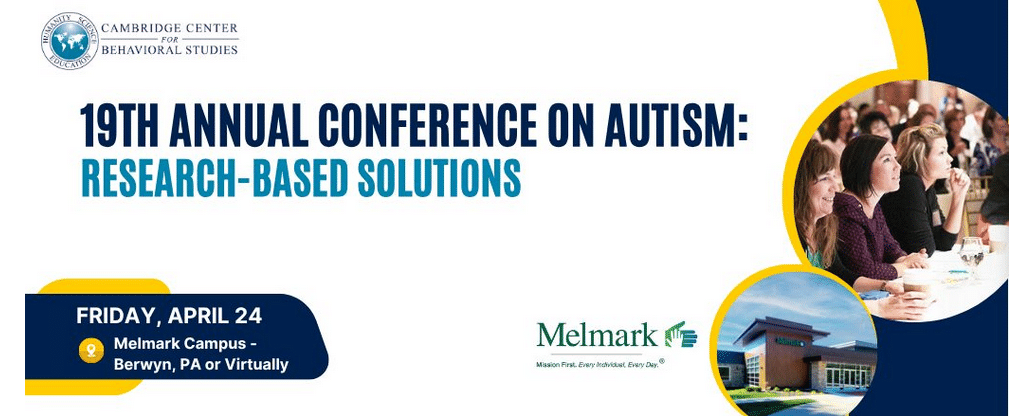
    Register for this one-day conference featuring leading experts in fields of Science, Special Education, and Autism Spectrum Disorders.

    Friday, April 24, 2026 – 9:00 am – 5:15 pm (Eastern Timezone) Get Schedule

    Register for in-person or virtual attendance. Recordings will be available for 14 days post-conference*.

    *NOTE that the rules for attendance verification for any asynchronous/home study through recordings have changed. For BACB Learning CEUs, there is a 3 question quiz for each presentation that needs to be passed. And we no longer offer Psychology CE Credits through asynchronous/home study. Psychology CE Credits are only available through live/synchronous learning. (For those seeking Psychology CE Credits, study is to be completed during live/synchronous attendance. Review Continuing Education Opportunities below.

    Of benefit to Behavior Analysts, Psychologists, Teachers, Speech-Language Pathologists, Special Education Providers, School Administrators, Students and Parents & Caregivers

  • The Wallet & The Vault: ABLE Accounts vs. Special Needs Trusts

    In this webinar, we will break down: Differences between an ABLE account and a Special Needs Trust. Rules, limits, pros, and cons of NC ABLE Accounts. Three main types of Special Needs Trusts. Learn how to keep your resources safe, maximize your savings, and build financial security on your own terms.

  • Workshop – Understanding Burnout

    This workshop is designed to provide autistic individuals, caregivers, educators, and clinicians with insights into navigating autistic burnout, emphasizing prevention and recovery in a supportive setting. We’ll explore the roots and effects of burnout, sharing practical advice for managing it. Participants will learn to spot early signs and adopt strategies that foster well-being. Recovery options will highlight the power of self-care and community resources. A Q&A session will encourage open dialogue, allowing everyone to share experiences and solutions, building a network of support.

    $25
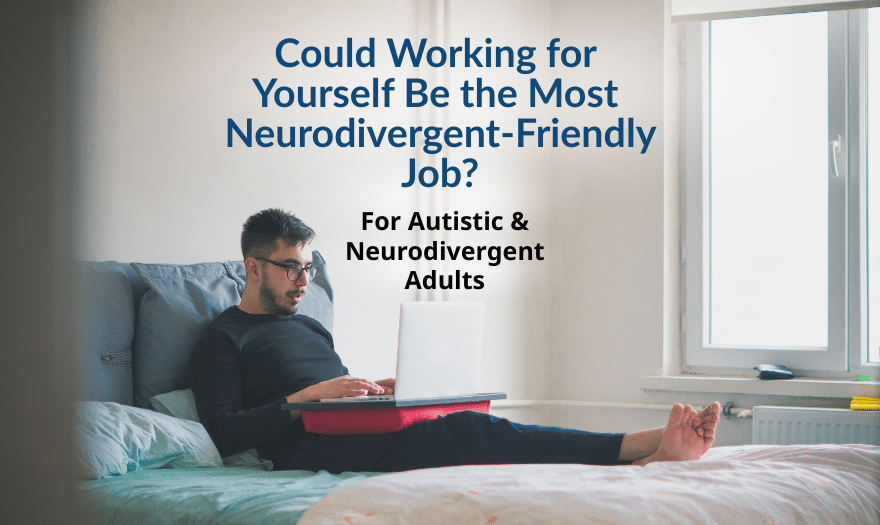
  • Employment Workshop for Adults

    Many neurodivergent people spend years trying to adapt to workplaces that do not fit the way they think, communicate, or work.

    This interactive session explores whether self-employment, freelancing, consulting, or business ownership could offer an alternative. We will examine both the strengths and challenges of entrepreneurship, look at different ways of working for yourself, and discuss practical strategies for building work around your needs, interests and strengths.

    Participants will leave with a clearer understanding of whether self-employment might be an option worth exploring.

    By the end of this session, participants will:

    Understand different forms of self-employment and entrepreneurship.
    Recognise strengths that can support business success.
    Identify common challenges and support needs.
    Learn how to build work around strengths rather than weaknesses.
    Explore whether self-employment could suit their own circumstances.
    Leave with practical next steps for further exploration.

    $25