• Support Group for Queer Women & Non-Binary Adults

    This 8-week gender inclusive support group is for LGBTQIA+ women, femmes, and nonbinary people. In this group members can build an ongoing connection with a small community.

    AANE support groups give members an opportunity to celebrate successes and support each other through difficulties. Common topics of discussion are:

    – Masking/camouflaging
    – Sensory sensitivities/overloads
    – Relationships
    – Self-care
    – Disclosure
    – Work/jobs
    – Intersectionality

    $100
  • World Autism Day: Intersectionality in Neurodivergent Lives Symposium

    Join us on World Autism Day, Thursday, April 2, for a powerful gathering of voices from across the Neurodivergent community. We will explore how our intersecting identities of race, gender, ethnicity, sexuality, disability, culture, and neurotype shape our Neurodivergent experiences of belonging and connection. Together, we’ll celebrate the strength of our shared experiences and imagine a future where every Neurodivergent person is seen, valued, and included.

    $45 – $60
  • Support Group – Gender Identity for Adults

    This group always meets on the first Thursday of the month and is for post-high school Autistic adults who are interested in discussing and exploring their gender in a supportive setting. Most people who attend identify as transgender, nonbinary, and/or genderfluid, and some are questioning their gender identity or gender roles. Join us to share stories and perspectives, and to get support. No autism diagnosis or certainty about gender identity is required to attend. This is a safe place to explore intersecting identities.

    Free
  • Women on the Spectrum Social Support Group

    Recurring

    Spectrum has partnered with Emory School of Nursing in starting a Women Only Group for women ages 18 and up with HFA/Asperger's, focusing on sharing challenges and successes of transition, supporting one another, and building friendships for success. This group meets twice monthly via Zoom, first and 3rd Fridays. Contact Dr. Susan Brasher to be added to the email notification list and for an invitation to join the private FaceBook page (Emory PCORI Young Women on the Autism Spectrum Group) susan.n.brasher@emory.edu

    RSVP for the Women Only monthly virtual meeting. Meetings are held the 1st and 3rd Friday of each month, 5-6 pm.

  • Discussion/Support Group for Adults over 50

    Are you an Autistic or Neurodivergent adult, over age 50? This group is a place for those over 50, to discuss a previously agreed to topic and share the unique concerns and issues that come with later awareness, in an atmosphere of support and understanding.

    Free
  • Introduction to Autism for Adults

    A presentation and discussion for Autistic adults to come and explore their understanding of autism through a neurological lens. We will discuss common misconceptions, the Autistic identity, and common Autistic traits, strengths, and challenges. This presentation is given by an Autistic adult and a Neurodivergent ally. You might enjoy this presentation and discussion if you are newly diagnosed, considering whether you may be autistic, or if you have only explored autism through a deficit lens in the past.

  • Community Connection Session for Adults

    This community connections discussion session is for Autistic adults. Participate in this free online discussion to connect with other Neurodivergent adults. Online sessions are hosted on the Zoom platform and are facilitated by AANE’s Individual & Family Services (IFS) staff.

    Free
  • Post School Outcomes

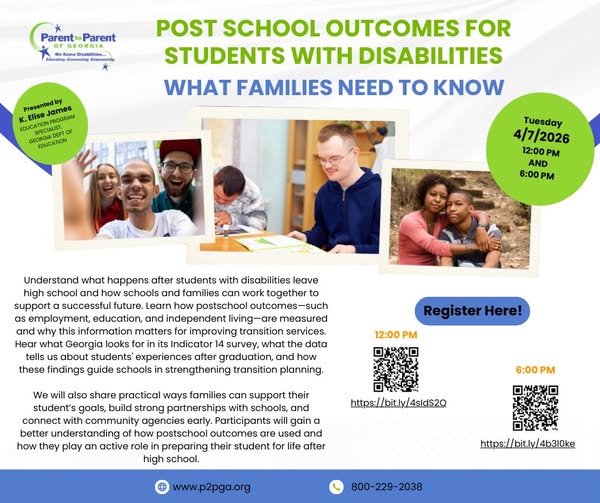
    What happens after students with disabilities leave high school? Join us for a webinar designed to help families understand the transition to adulthood and how schools and families can work together to support a successful future.
    During this session, we’ll explore post-school outcomes like employment, continuing education, and independent living, and why this information is important for improving transition services. We’ll also break down Georgia’s Indicator 14 survey, what it tells us about students’ experiences after graduation, and how schools use this data to strengthen transition planning.
    Families will leave with practical ideas for supporting their student’s goals, building strong partnerships with schools, and connecting with community resources early so students are better prepared for life after high school.

    Free
  • Post School Outcomes

    What happens after students with disabilities leave high school? Join us for a webinar designed to help families understand the transition to adulthood and how schools and families can work together to support a successful future.
    During this session, we’ll explore post-school outcomes like employment, continuing education, and independent living, and why this information is important for improving transition services. We’ll also break down Georgia’s Indicator 14 survey, what it tells us about students’ experiences after graduation, and how schools use this data to strengthen transition planning.
    Families will leave with practical ideas for supporting their student’s goals, building strong partnerships with schools, and connecting with community resources early so students are better prepared for life after high school.
    Register here for the 12:00pm session: https://bit.ly/4sIdS2Q
    Register here for the 6:00pm session: https://bit.ly/4b3l0ke

    Free
  • Policy & Systems Advocacy

    Participants will learn:
    1. What is system policy advocacy
    2. Stages of policy change
    3. How to become involved.

    Free