• Multi-Session Advanced Dungeons & Dragons Interest Group for Adults

    Recurring
    Virtual

    This interest group is intended for post-high school adults who fulfill the player pre-requisites outlined below:

    Participants need to have played Dungeons and Dragons before either at AANE or elsewhere.
    They must also be familiar with character creation, general rules of D&D Edition 5, cooperation within a team, and following campaign rules and storyline.
    Each participant is expected to attend all 8 meetings in order to help his/her team advance as far as possible in the campaign.
    This interest series will be using a campaign selected by the Dungeon Masters. Participants must agree to follow the rules of the campaign at all times.
    Because this is an interactive/collaborative game. Participants need to be able to participate fully in each game session.
    Please note that this is a two-step process (application and registration). If you are interested in this group, please submit the application above.

    $100
  • Freeing the “Anxious Generation” From the Harms of a Phone-Based Childhood

    Virtual

    Gen Z is the first generation in history to go through puberty with portals in their pockets that call them away from the people nearby and into an alternative universe that is exciting, addictive, and unstable. Zach Rausch, lead researcher for the #1 New York Times bestseller The Anxious Generation, will argue that the decline of independence, responsibility, and free play in childhood and the rise of smartphone and social media use among adolescents is driving the youth mental health crisis that is impacting teens in nations all across the world. Drawing on research from numerous academic fields, he will provide concrete solutions that will help parents and teens to escape out of the social traps they find themselves in.

    Learning Objectives
    Critically review and analyze adolescent mental health trends to improve the quality of care for young people in treatment.
    Better manage adolescent mental health struggles by incorporating collective action solutions that can reduce overprotection in the real world and underprotection online.
    Evaluate causal claims related to the impact of digital technology on youth mental health.

    $27.18
  • Employment Workshop – Apprenticeships and Trades for Adults

    Virtual

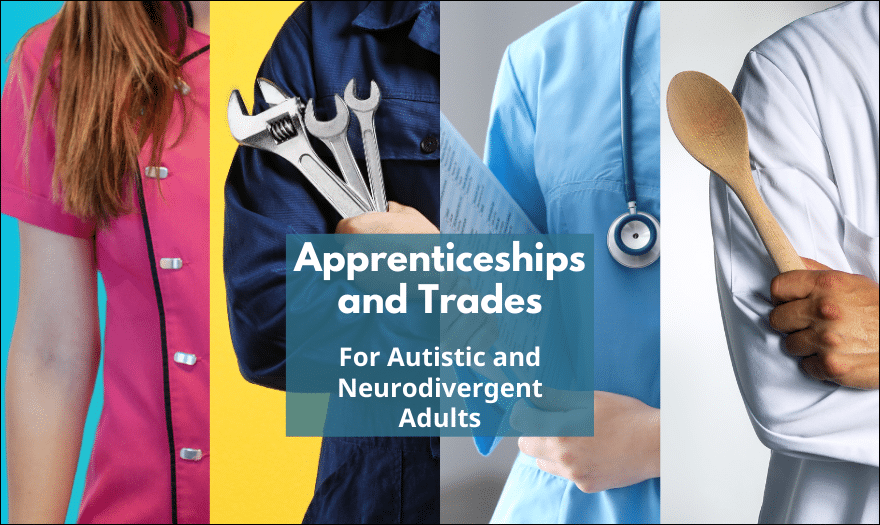
    If continuing your academic studies past high school is not attractive or achievable, there are alternatives, regardless of your age! You may want to consider jobs that are more “hands on” such as being a jeweler, brick mason, electrician, dental assistant or elevator mechanic. The world needs individuals with practical skills and certain trades can be very lucrative. Come to this session if you want to explore the options regarding apprenticeships and vocational training. It might be that earning as you learn, with mentorship and oversight is the right solution for your future career.

    *Please note that this event will be recorded. The recording will be sent out to registrants a few days after the live event and participants can watch the recording for up to 30 days.

    $25
  • Touchpoints Training for Mental Health Clinicians and Developmental Services Providers (JAN 2025)

    Recurring
    Virtual

    The Touchpoints Approach can be integrated into mental health clinical therapeutic theory and practice, as well as into developmental evaluation and therapeutic services. This training applies Touchpoints to help providers nurture strengths-based collaborative partnerships with families especially when families are affected by children’s special needs.

    Brazelton Touchpoints has proven to improve provider and parent knowledge of child development, reduce parental stress, and enhance collaborative family-provider partnerships in service of healthier family-child relationships. Touchpoints implements a deep understanding of children’s behavior as a primary family engagement and treatment strategy by anticipating known periods of increased stress in family functioning that are associated with developmental processes. Touchpoints employs developmental-relational care to effectively manage behavioral, emotional, or relational concerns that might arise about a child.

    In this training, participants practice strengths-based strategies to nurture collaborative partnerships with families in service of emotional well-being and parental competence. They also gain knowledge of theory and practice in delivering culturally-humble, relationship-based, developmentally-informed psychotherapeutic services. While Brazelton Touchpoints is a preventive model of care, this adaptation for mental health and developmental clinicians incorporates its theory and practice into intervention and treatment, taking into account effects of trauma and healing upon development and family functioning. Touchpoints is designed to complement existing psychotherapeutic skills to enhance diverse clinical orientations and techniques. These may include infant and early childhood mental health dyadic and family systems, child-parent psychotherapy, interpersonal and psychodynamic, cognitive-behavioral, parent guidance, and developmental play therapy.

    Course format: This course consists 28 training hours including six monthly one-hour virtual reflective practice sessions. Each of the five modules takes about five hours to complete, and includes a live, interactive Zoom session, assignments for independent practice, and online discussion. Attendance is required at all live sessions. Participants who complete the course will receive a certificate. This course is approved for 20.25 Continuing Education Credits for physicians, nurses, social workers, and psychologists. Learn more.

    Session Dates and Times: Live sessions are on Mondays, 12-4 pm ET / 9 am – 1 pm PT

    01/27/2025
    02/03/2025
    02/10/2025
    02/24/2025
    03/03/2025
    03/10/2025
    The live sessions will be followed by six monthly Reflective Practice calls; the schedule will be set prior to the end of the main training.

    What you will learn:

    Strategies for building partnerships with parents that promote family strengths and emphasize preventive emotional health as well as therapeutic healing
    Techniques for integrating strengths-based attitudes and relationship-based practices into therapeutic care for individuals and families
    Strategies for strengthening parent-child relationships as a key influence on a child’s development and emotional functioning
    How to understand the processes of child development that create stress and conflict within families and how these offer opportunities for deepened relationship and healing
    Treatment techniques to address the impact of trauma and adversity within and upon the developmental process
    A framework to understand why children’s behavior can sometimes be challenging and confusing
    Techniques for talking with families about child development concerns
    How to actively listen to families and collaboratively solve problems related to child development or a child-family relationship
    Number of participants:

    Minimum of 10

    Maximum of 20

    $895
  • Multi-Session Small Group Employment Coaching for Experienced Workers

    Recurring
    Virtual

    If you are experienced in your career and are looking for a new job, career, promotion or just ways to make your current job work better for you, this is a coaching course that could be helpful. This practical coaching course will cover all aspects of job hunting/maintaining by building your knowledge weekly, helping you identify action steps and supporting you to work through any worries or issues you face, with the help of a workbook. We’ll cover conflict, difficult conversations and feedback too.

    You will be provided with guidance, training, accountability and inspiration over the 8 weeks to help you feel more confident, leaving you with a personalized roadmap for getting what you want in your working life.

    $150
  • Online “Closed” Support Group for Women (40-60)

    Recurring

    This “closed” support group is designed for Autistic women (40-60) looking to build an ongoing connection with a small community of other women. This “closed” support group also gives women an opportunity to voice their concerns and frustrations and lets them acknowledge hard-won and unexpected victories. Common topics of discussion are:

    Masking/camouflaging
    Sensory sensitivities/overloads
    Relationships
    Self-care
    Empathy

    $100
  • Horario De Oficina Virtual

    Recurring
    Virtual

    Reunase personalmente con un especialista en apoyo familiar de Care Parent Network y obtenga respuestas a sus preguntas

    15 minutos

    https://us02web.zoom.us/meeting/register/tZclcemqrjMoG9AFofxva-CcBTps0Vq-t0I7

  • Virtual Office Hours in English

    Recurring
    Virtual

    English Speaking

    Meet 1:1 with a Care Parent Network Family Support Specialist and get your question answered

    Sign up for a 15 minute time slot

    https://us02web.zoom.us/meeting/register/tZctduyvqzkrGtbcF1DZUfTQvK-Vj2a2uQH_

  • Multi-Session Support Group for Parents of Transition Age Youth (18-22)

    Recurring
    Virtual

    This closed group is designed for parents and family members of Autistic transition-age youth (18-22). This group is limited to 15 participants for caregivers to connect with one another and share information.

    Dates
    January 7
    January 14
    January 21
    January 28
    February 4
    February 11
    February 18
    February 25

    $180
  • Multi-Session Support Group for Adults

    Recurring
    Virtual

    A closed support group has the same group members (up to 12) for a set number of sessions (8). Closed support groups are ideal for adults who are looking for deeper connections and more extensive peer support from group members. For the best support group experience, closed group members should plan on attending all 8 meetings in the series. This group offers a safe environment where Autistic adults can talk with like-minded people, share issues and concerns, and celebrate successes. Common topics include: disclosure, self-advocacy, and relationships.

    Dates
    January 14
    January 21
    January 28
    February 4
    February 11
    February 18
    February 25
    March 4

    $100